
Winter riding in the UK comes down to three things: staying warm, staying dry, and being seen. Get those right and the colder months can be some of the best riding of the year. Get them wrong and you will be cold, distracted and less safe within the first twenty minutes.
The cold is worse on a bike than the thermometer suggests. Riding at 60 mph on a 4°C morning exposes you to a wind chill of roughly -5°C. Add rain, spray and short days, and your summer kit stops doing its job.
This guide covers what to wear from the skin out: layers, jackets and trousers, gloves, boots, and the small items that make a big difference. You will also find a checklist of winter road hazards to watch for.
Start with layers, not one big jacket

A single thick jacket traps heat unevenly and leaves you either freezing at a standstill or sweating at motorway speed. Three thin layers do the job better, because you can add or remove them as conditions change.
- Base layer. Worn against your skin to move sweat away. Choose merino wool or a synthetic fabric. Avoid cotton, which holds moisture and makes you colder.
- Mid layer. Your insulation. A fleece or a light insulated jacket works well. Many riding jackets include a zip-in thermal liner that does this job.
- Outer layer. Your protection from wind, rain and a fall. It should be windproof, waterproof or fitted with a waterproof liner, and have CE-approved armour at the shoulders, elbows and back.
One practical check: try the layers on together before you buy. The outer jacket has to fit comfortably over your base and mid layers while keeping the armour in place on your shoulders, elbows and back. Armour that has shifted will not protect you where it should.
A note on puffer jackets. A puffer is a good warm layer for off the bike, but it is not riding protection. It has no impact armour and is not designed to resist abrasion in a slide. Wear it to the pub, not on the road.
Leather or textile for winter?
Both work, and the right choice depends on how and where you ride. Here is how they compare in cold, wet UK conditions.

|
|
Textile |
Leather |
|---|---|---|
|
Rain |
Usually the easier choice, with a waterproof membrane or liner |
Needs a waterproof liner or leather treatment, and can feel heavy when soaked |
|
Warmth |
Zip-in thermal liners let you adjust for the weather |
Blocks wind well, but you add warmth with layers underneath |
|
Slide protection |
Good when made from abrasion-resistant fabric |
Excellent abrasion resistance |
|
Upkeep |
Low: wipe down and wash as the label says |
Higher: clean and condition it regularly |
|
Best for |
Commuting and touring through wet weather |
Shorter rides and riders who want a classic look |
If you ride every day through the winter, a textile jacket with a removable thermal liner and a waterproof layer is usually the most practical. If you prefer leather, wear a waterproof layer over it when heavy rain is forecast.
Whichever you choose, check three things: the armour is CE-approved, the zips and cuffs close properly against draughts, and the sleeves and collar seal around your gloves and neck.
Browse the range:
- Men's motorcycle jackets
- Women's motorcycle jackets
- Men's leather jackets and coats
- Men's waterproof textile touring jacket
Trousers and jeans
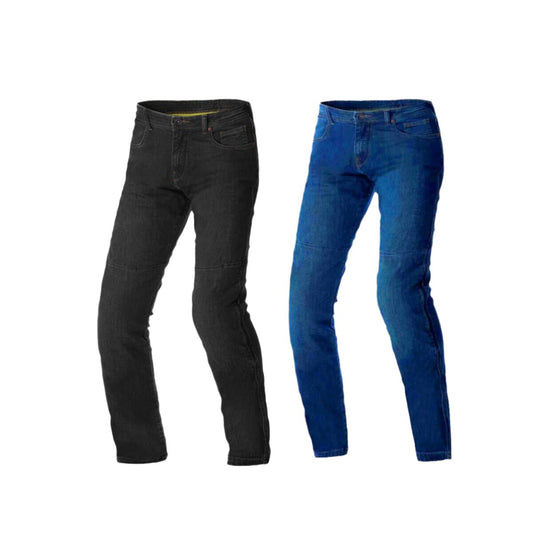
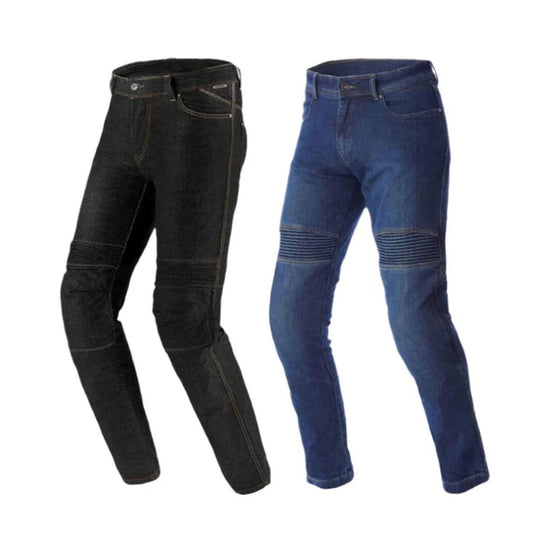
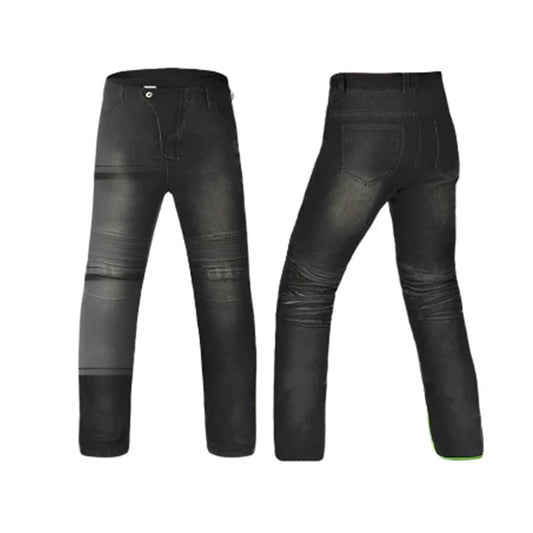
Your legs take as much of the cold and spray as your torso, and they are at risk in a fall. Textile riding trousers with a thermal liner are the warmest and driest option.
If you prefer jeans, Kevlar-lined motorcycle jeans give you abrasion protection and a casual look. Standard jeans are not waterproof and not insulated, so wear a thermal base layer underneath and pull on waterproof over-trousers when rain is forecast. Keep the over-trousers in your top box so you are never caught out.
- Motorcycle trousers
- Men's Kevlar motorcycle jeans
- Women's Kevlar motorcycle jeans
- Body armour and protection
Keep your hands, feet, neck and head warm

Your extremities lose heat first, and cold hands or feet are more than uncomfortable: they slow your reactions and make it harder to work the brakes and clutch. Spending on these items pays back quickly.
Gloves
Summer gloves will not do in winter. Choose insulated, waterproof gloves with a long gauntlet that fits over your jacket cuff, so rain cannot run down your sleeve. Check you can still feel the brake and clutch levers, as thick gloves that numb your touch are a hazard. If your hands still get cold, heated grips or heated gloves are worth considering.
Boots and socks
Choose boots with a waterproof lining, a sturdy sole for wet grip, and ankle support. Wear one pair of thick merino or thermal socks rather than two thin pairs, because squeezing your feet into a tight boot cuts off circulation and makes them colder. Keep your trouser legs over the top of the boot so water runs down the outside.
Neck and head
A draught around your neck can chill you faster than almost anything else. A neck tube or a thin balaclava under your helmet closes that gap. In your helmet, fit an anti-fog insert or apply an anti-fog treatment to the visor, and keep a cloth in your pocket for the inside of the visor. If the visor fogs, crack it open slightly rather than riding blind.
Be seen, and ride for the conditions
The clocks go back on Sunday 25 October 2026, and by mid-December sunset is around 4pm or earlier across most of the UK. A lot of your riding will be in the dark or in low sun, so visibility matters more than it does all summer.

- Wear hi-viz or reflective gear. It is not a legal requirement for riders in the UK, but it makes you easier to spot, especially in rain and spray. A hi-viz textile jacket is an easy upgrade.
- Look for reflective panels on the jacket, trousers and gloves.
- Use a clear visor at night and keep it clean inside and out.
Winter road hazards
Cold, wet roads change how a bike behaves. Allow extra distance and ride smoothly.

- Frost and black ice. Be cautious on cold, clear mornings, in shaded spots and on bridges.
- Wet leaves. They are slippery and often hide in corners and under trees.
- Diesel spills and painted road markings. Both lose grip when wet.
- Grit and salt. They can reduce grip. Rinse your bike and your gear afterwards to protect them.
- Tyres. Pressures drop as the temperature falls, so check them more often and keep an eye on tread depth.
The simplest rule: brake earlier, lean less, and keep your inputs smooth.
Winter motorcycle gear: common questions
What should I wear on a motorbike in winter?
Wear three layers: a moisture-wicking base layer, a warm mid layer, and a windproof, waterproof outer jacket with CE-approved armour. Add insulated waterproof gloves, waterproof boots, a neck tube, and over-trousers for heavy rain.
Is leather or textile better for winter riding?
Textile is usually the easier choice for daily winter riding because of its waterproof liner and removable thermal layer. Leather offers excellent slide protection and blocks wind well, but needs a waterproof layer in heavy rain and more care.
Can I wear Kevlar jeans in winter?
Yes. Wear a thermal base layer underneath and waterproof over-trousers on top in the rain, because Kevlar jeans are neither waterproof nor insulated on their own.
How do I keep my hands warm on a motorbike?
Choose insulated, waterproof gauntlet gloves that cover your jacket cuffs. Heated grips or heated gloves help on longer rides, and keeping your neck and torso warm helps your hands stay warm too.
Do I have to wear hi-viz on a motorbike in the UK?
No, it is not a legal requirement for riders. It does make you easier to see in rain, spray and low light, which is why many riders choose it in winter.
Ready for winter?
Shop winter-ready riding gear at Motrox, from jackets and trousers to gloves, boots and body armour. Not sure what you need? Get in touch and we will help you choose.